2 min read

Building AI-Native Fraud Prevention for Financial Firms

AI is reshaping the threat landscape and the tools used to fight back. For financial institutions, that raises a question worth sitting with: what does truly AI-native fraud prevention actually look like?

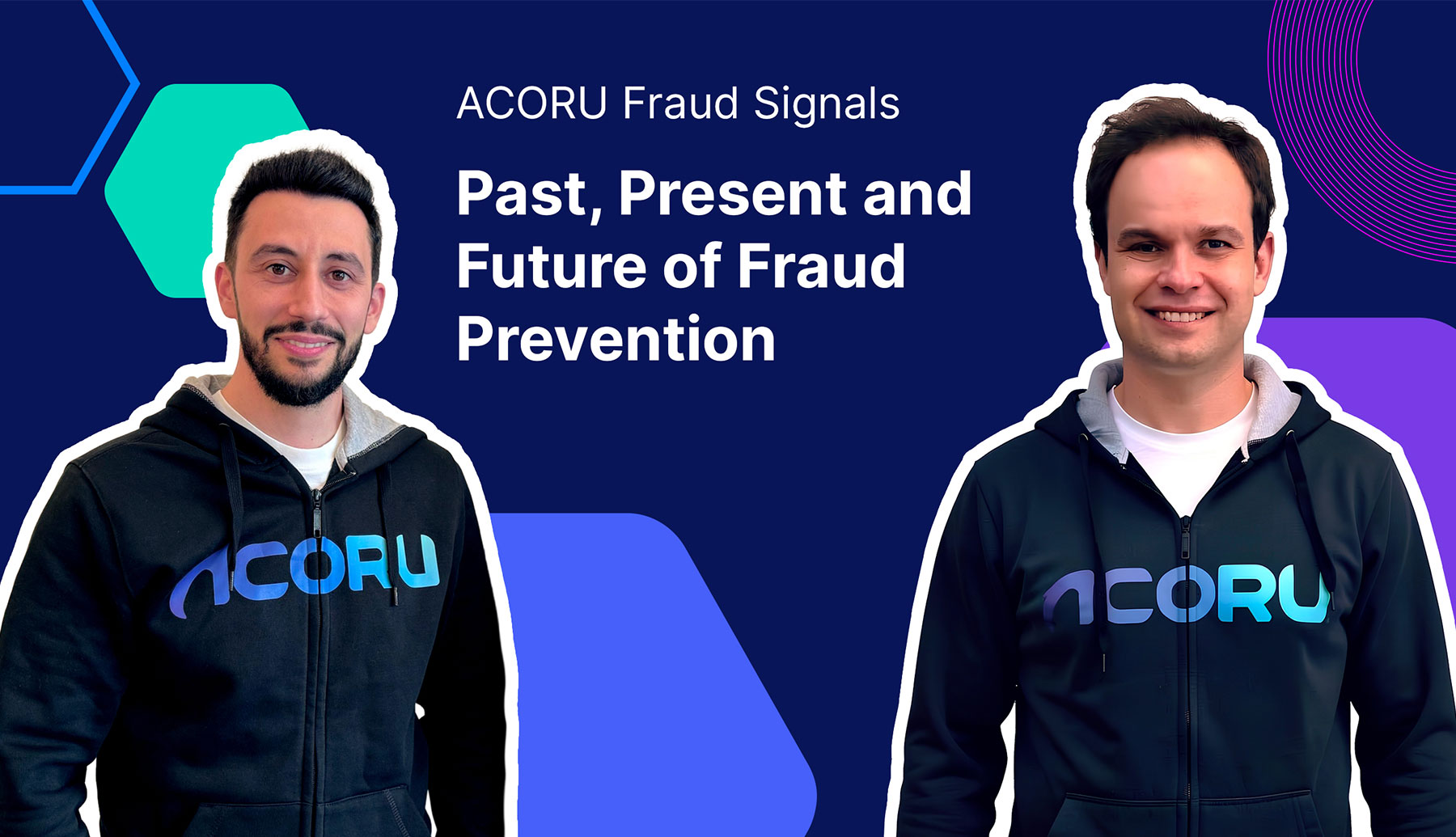
In this Acoru Fraud Signals conversation, José Corrales, CPO, sits down with Ken Jochims, Head of Product Marketing, to explore what it means to build a fraud prevention platform with AI at its core from day one, and why that architectural foundation unlocks capabilities that are hard to replicate any other way.

From the Large Account Model (LAM) to agentic operators and copilot tools, the conversation gets into how Acoru is helping fraud teams make the shift from reactive to proactive.

What is AI-native fraud prevention?

AI-native fraud prevention is an approach in which AI is built into the fraud prevention platform from the outset. Rather than evaluating transactions in isolation, it connects identity, account, and behavioral signals over time to help teams spot emerging risk earlier. AI tools can support investigation and recommend actions, while analysts retain oversight of decisions. 


Key Takeaways

  • AI-native is not the same as AI-enhanced. Layering AI onto legacy architecture is a bit like using GPS to read a paper map. It helps, but the foundation was never built for it. Acoru was designed from scratch in an era where AI is a practical reality, and that difference runs deep.

  • From reactive to predictive. Traditional systems are always playing catching up with fraud. Acoru's Large Account Model (LAM) takes a wider view, tracking behavior over time across identity signals and online sessions, to anticipate what's coming next.

  • Fraud is a network, not an isolated event. A mule account is never operating alone. Effective detection means connecting the dots across millions of accounts and understanding the ecosystem behind fraud, not just flagging individual transactions.

  • Acoru Copilot and Workforce change how analysts work, not just how fast they work. Copilot handles the task-led, repetitive research. Workforce goes further, spotting patterns, proposing rule changes, and recommending actions, always with a human in control. The result is analysts spending less time doing and more time on strategy.

  • Explainability is a foundation, not a feature. Every action Acoru's AI proposes is auditable and observable. Humans approve before anything is enacted. That transparency matters for trust, and it matters for regulators.

  • The mindset shift is as important as the technology. Fraud teams need to move from tactical and operational to strategic. AI handles the data gathering and pattern recognition. Analysts focus on the decisions that actually require human judgment.


See Acoru in Action

Fraud in Latin America is moving fast, and the institutions keeping pace are the ones rethinking how they detect, share, and act on intelligence. If the challenges discussed in this episode sound familiar, we would be glad to show you how Acoru works in practice.

Scam Prevention in Mexico & Colombia | Fraud Signals

1 min read

Scam Prevention in Mexico & Colombia | Fraud Signals

Fraud prevention teams across Latin America are dealing with the same headaches, whether they're sitting in Mexico City or Bogotá.

Read More
Fraud prevention trends: lessons from two decades on the front line

1 min read

Fraud prevention trends: lessons from two decades on the front line

Twenty years of fighting financial fraud leaves you with a particular kind of pattern recognition. That is where we started a recent conversation on...

Read More
What is Section 230 & Scam Liability: Explained for US Banks

1 min read

What is Section 230 & Scam Liability: Explained for US Banks

Losses reported to the FBI’s Internet Crime Complaint Center (IC3) exceeded $20 billion in 2025. Legislation is moving through Congress. A...

Read More